

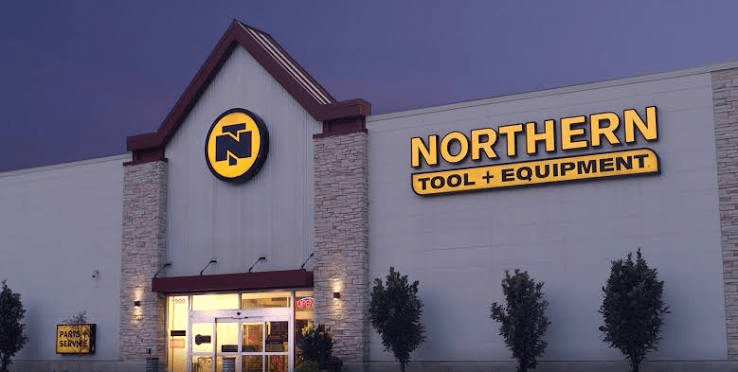
When a local store shuts down or rumors start spreading online, it’s easy to assume the worst. But a single store closure is not the same as a company falling apart. They are very different things, and it’s worth separating the two before drawing any conclusions.
This article looks at Northern Tool’s actual business size, recent moves, financial profile, and what all of it means for customers, employees, and anyone wondering whether the company is in real trouble.
What Northern Tool Actually Is
Northern Tool + Equipment started in 1981 in Minnesota under the name Northern Hydraulics. It has been privately held and family-owned since day one — it has never been a publicly traded company.
The company sells tools and light industrial equipment through retail stores, a catalog, and an e-commerce site. It also owns several private-label brands including NorthStar, Powerhorse, Klutch, Strongway, and Roughneck.
That last point matters. Because Northern Tool both manufactures and sells products under its own brands, it has more control over its margins than a retailer that only resells other companies’ products. That kind of structure tends to make a business more resilient when markets get tight.
The Short Answer — No, Northern Tool Is Not Going Out of Business
There are no bankruptcy filings. No liquidation announcements. No credible reports of a company-wide shutdown. If any of those things existed, they would be easy to find — bankruptcy filings are public records.
Here is what the available data actually shows:
- Estimated annual revenue of approximately $1.6 billion as of 2025
- Around 1,800 employees
- Over 100 retail stores across 20 states
- Headquarters in Burnsville, Minnesota
- A credit profile described as strong, with no defaults or notable risk events on record
These are estimates — Northern Tool is private and does not publish audited financial statements. But even as rough figures, they do not describe a company that is quietly collapsing. A business with $1.6 billion in revenue and a clean credit record is not on the verge of disappearing.
The numbers come from third-party business research, not from Northern Tool itself, so treat them as informed estimates rather than official data. That said, they point clearly in one direction: this is a functioning, mid-sized company with no public signs of distress.
Recent Moves That Point to Growth, Not Retreat
One of the clearest ways to judge a company’s direction is to look at what it actually does — not what people say online.
In April 2021, Northern Tool acquired Jacks Small Engines, a parts and service business. The stated goal was to bring more parts inventory online and into physical stores. That is a forward-looking investment in service capability. Companies that are quietly winding down do not typically spend money buying other businesses.
For customers, that acquisition matters practically. If you buy a generator or a pressure washer, you eventually need parts. Northern Tool expanding its parts network is a direct benefit to anyone who already owns or plans to buy their equipment.
Northern Tool has also been recognized as a Minnesota Top Workplace for multiple years. That kind of recognition reflects internal stability — employee satisfaction surveys, consistent management, and a workplace people actually want to stay in. Businesses quietly heading toward closure tend to lose employees fast and do not show up on “best workplace” lists.
What a Store Closure Actually Means (And What It Doesn’t)
The most common reason people search this question is simple: their local Northern Tool closed, and they want to know if the whole company is going under.
That concern is understandable, but a single store closing does not mean the company is failing. Retailers regularly close locations that are not hitting their targets. It’s called footprint optimization — you cut the spots that are draining money and keep the rest running. This is normal retail business management.
A real retail collapse looks very different. Think about what happened with Sears. The collapse came with public bankruptcy court filings, mass closures across every state at the same time, liquidation sales where nothing was being restocked, and eventually the end of its online operations. Every sign pointed the same direction, all at once.
Northern Tool shows none of those signals. The company still operates stores across 20 states. Its website is active. It is still selling and shipping products. If your local store closed, that is worth noting — but it is not evidence that the entire company is shutting down.
A simple check: if the company still operates a website, maintains stores in other cities, and continues to sell products — it is not going out of business. Northern Tool clears all three of those tests.
What This Means If You’re About to Make a Big Purchase
This is probably the most practical part of the article. If you are considering spending $500 to $3,000 or more on a generator, air compressor, log splitter, or trailer, you have a real reason to care about the company’s long-term stability. You want to know that warranty support and replacement parts will still exist in three to five years.
Based on what the research shows, there is no reason to avoid buying from Northern Tool out of fear that it will disappear. The company has strong estimated revenue, no signs of financial distress, and has recently expanded its parts availability through the Jacks Small Engines acquisition.
That said, here are a few practical steps worth taking regardless of which retailer you buy from:
- Register your product warranty immediately after purchase. Do not wait.
- Keep your receipt and packaging until the warranty period ends.
- Check that replacement parts are available online for the specific model before you buy. Northern Tool’s expanded parts network makes this easier.
- Read the warranty terms carefully. Understand what is covered and for how long.
These steps apply any time you make a large equipment purchase, from any retailer. They are just good practice.
What About Competition from Home Depot, Lowe’s, or Amazon?
This is a fair question. Northern Tool operates in a competitive space. Home Depot and Lowe’s carry many of the same product categories. Amazon sells tools at scale. Any honest assessment needs to acknowledge that.
But Northern Tool’s position is more specialized than a general hardware store. It focuses on light industrial and contractor-grade equipment — log splitters, generators, pressure washers, air compressors, tow-behind equipment. These are not categories where Amazon has a major advantage, since they involve more product knowledge, parts support, and in-person service than a pair of socks or a phone case.
The company’s private-label brands also give it a pricing advantage in specific categories. When you sell your own brand, you are not competing on the same shelf as everyone else — you control the product and the margin.
None of this makes Northern Tool immune to economic downturns or broader retail pressures. No retailer is. But it does mean the company is not simply a commodity reseller that can be easily replaced by a search on Amazon.
For more business and retail coverage on topics like this, SlideJournal covers industry trends in plain language.
How to Spot Real Trouble at Any Retailer
If you want to stay informed about any retailer — not just Northern Tool — here are the signs that actually matter:
- Bankruptcy court filings. These are public. If a company files for Chapter 7 or Chapter 11, it shows up in court records and major news outlets immediately.
- Company-wide liquidation sales. Real closures involve signs like “everything must go” across all locations, not just one.
- No new inventory arriving in stores. If shelves stay empty and nothing is being restocked, that is a warning sign.
- Website goes dark or stops accepting orders. A company winding down will eventually lose the ability to fulfill online orders.
- Mass layoffs announced across all departments. One location closing is not the same as company-wide workforce cuts.
Northern Tool shows none of these signs. The website is functional, stores are operating, inventory is being stocked, and the company recently made an acquisition — which is the opposite of a business preparing to shut down.
The Bottom Line
Northern Tool is not going out of business. There is no bankruptcy filing, no liquidation sale, and no credible sign that the company is winding down. With an estimated $1.6 billion in annual revenue, 100-plus stores across 20 states, a recent acquisition, and a clean credit profile, the company looks like a stable mid-sized retailer that has been running consistently since 1981.
If your local store closed, that is frustrating — but it is not a company collapse. Retailers close individual locations all the time without shutting the whole operation down.
If you are planning a large purchase, the evidence available suggests Northern Tool will be around to honor warranties and supply parts. Take the normal precautions any smart buyer would take, and make your decision based on facts rather than online rumors.
Also Read This: