

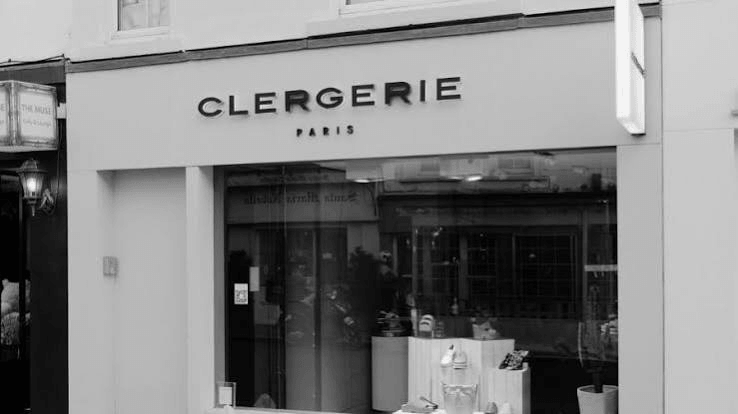
If you searched for Clergerie recently and found confusing headlines about liquidation, receivership, and a last-minute sale, you are not alone. The story is real, recent, and more complicated than a simple yes or no.
The short answer: the original companies behind Clergerie were legally liquidated. But the brand name was sold to a new owner before the doors fully closed. That means two things that seem contradictory are both true at the same time.
This article walks through what actually happened — the legal steps, the timeline, who bought the brand, what happened to employees, and what customers should expect going forward.
A Quick Look at What Clergerie Is
Clergerie is a French luxury footwear brand founded by designer Robert Clergerie. It became known for menswear-inspired women’s shoes and a strong “Made in France” identity.
The brand is rooted in Romans-sur-Isère, a town in southeastern France that has historically been one of the most important shoe-manufacturing regions in the country. At its peak, Clergerie operated 21 stores worldwide and had a loyal following among French consumers and international fashion buyers.
This background matters for one key reason: the factory, the jobs, and the brand name are three separate things. As you will see, they ended up with three very different fates.
The Financial Collapse — A Step-by-Step Timeline
The collapse did not happen overnight. It unfolded across more than a year, through several distinct legal stages.
March 2024: Receivership
On March 29, 2024, the Paris Commercial Court placed Clergerie under receivership, known in French law as redressement judiciaire. Think of this as business intensive care. The company stayed open and kept trading, but it came under court supervision while looking for new funding or a buyer.
At this stage, the brand was struggling after a relaunch that failed to gain traction, and broader economic pressures were hitting the luxury footwear market hard.
December 2024: Formal Observation Period Begins
On December 4, 2024, a formal six-month observation period began under the receivership process. Debt at this point was reported at around €1 million. The court was watching closely to see whether the company could find a way forward.
March 2025: Production Company Enters Liquidation
On March 11, 2025, the Romans-sur-Isère trade court placed Clergerie’s production company, known as SSB, into judicial liquidation with continuation of activity until April 25. This is a specific legal step that allows an insolvent company to keep running temporarily while a buyer is found or the business is wound down in an orderly way.
At this stage, roughly 31 employees were working at the factory, with 29 others on partial unemployment.
Early April 2025: Definitive Liquidation
On April 8, 2025, the Romans-sur-Isère commercial court ordered definitive judicial liquidation. This is the legal point at which the original operating companies formally ceased to exist.
Around 50 redundancies were reported. Total debts were approximately €7 million for SSB (the production company) and €1.5 million for JHJ (the commercial arm). Clearance sales were organized to liquidate remaining stock.
So Did the Brand Die, or Just the Company?
This is the question most people are actually asking. The answer requires separating two things that are easy to confuse: the legal entity and the brand.
The operating companies — SSB and JHJ — were liquidated. Those legal entities are gone. But the brand name, trademarks, and assets were sold separately to a new owner before the full wind-down was complete.
A useful way to think about it: judicial liquidation is like shutting down a restaurant and selling off the kitchen equipment and the recipe. A new owner can buy the recipe and the name and reopen somewhere else. The original restaurant is still closed — but the food might still exist under the same name.
This is why headlines saying “Clergerie liquidated” and headlines saying “Clergerie sold to new owner” are both accurate at the same time. For the 50 workers at the Romans-sur-Isère factory, the company closing is a very real ending. For a customer who wants to buy Clergerie shoes, the brand technically continues.
Who Bought Clergerie?
According to reporting from FashionNetwork and Wikipedia, the brand was acquired by a Spanish company called Petrel 92 SL. Wikipedia records the sale as completed in May 2025.
There is one point worth flagging. A separate report on Yahoo Finance claimed that a company called Titan Industries assumed ownership of Clergerie, reportedly paying around €700,000 for the brand name and pledging €6 million in future investment. This account conflicts with the more widely corroborated European reporting that names Petrel 92 SL as the acquirer. The Titan Industries claim should be treated with caution until further details are confirmed through reliable sources.
For now, the most consistent picture from French and fashion industry sources points to Petrel 92 SL as the current owner.
What Happened to Employees After the Sale?
This is where things get difficult. The court ruling reportedly required the buyer to maintain all employee contracts. But according to FashionNetwork, the buyer’s actual intention was to keep only around 14 employees out of the approximately 50 who were employed at the time.
As of post-sale reporting, employees were described as being “in the dark” about future plans. No detailed public announcement had been made about what operations would look like under new ownership.
For the workers in Romans-sur-Isère, this is not an abstract business story. It is the loss of jobs in a region that has already seen significant decline in its once-thriving shoe manufacturing industry. Local coverage described the liquidation as the end of the last luxury shoemaker in the area — a real blow to the town’s industrial identity.
What Does This Mean for Customers?
If you are a Clergerie customer wondering whether you can still buy the shoes, here is what the available information suggests.
- Clearance sales happened in April 2025. Stock from the liquidation was sold off at discounted prices. If you saw unusual sale pricing around that time, that was why.
- The brand is under new ownership. Petrel 92 SL acquired the name and assets, so the Clergerie label is not completely gone.
- The retail network may shrink. Clergerie previously had 21 stores worldwide. What the new owner plans to do with that retail footprint has not been clearly announced.
- Production may change. The original factory in Romans-sur-Isère is not guaranteed to remain part of the operation under the new owner. Any future “Made in France” labeling should be verified directly with the brand.
The honest answer is that a lot remains uncertain. The brand name exists. Whether it will look, feel, and operate like the Clergerie customers knew is a question the new owner has not fully answered publicly yet.
Why Did Clergerie Get Into Trouble?
There is no single cause, but a few factors come up in the reporting.
The brand had gone through a relaunch that struggled to gain momentum. Rising production costs and a competitive global footwear market added pressure. And maintaining a “Made in France” manufacturing base is expensive — it is a meaningful point of difference, but it comes with costs that are hard to sustain when sales are soft.
Clergerie is not the only heritage fashion brand to face this kind of crisis. Smaller luxury labels without the financial backing of a large conglomerate are particularly exposed when market conditions tighten. Without a deep-pocketed parent company to absorb losses, a bad year or two can quickly become unrecoverable.
For more coverage of how fashion and retail brands navigate financial difficulty, Slide Journal covers these kinds of business stories in plain language.
The Bottom Line
Clergerie as it existed — with its original ownership, factory workers, and operating companies — has gone out of business. The judicial liquidation in April 2025 made that official.
But the brand name was purchased by Petrel 92 SL and has not disappeared entirely. What it becomes under new ownership is still unclear. The new owner has not released a detailed public plan, employees have been left uncertain, and the full retail picture has yet to take shape.
So if someone asks whether Clergerie is going out of business, the most accurate answer is this: the original company did. The brand may survive, but in a significantly different form than what loyal customers knew. Watch for updates from the brand directly before assuming the full Clergerie experience you remember will return unchanged.
Also Read This: