

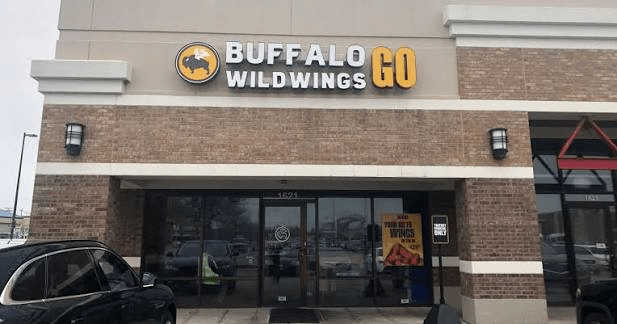
If your local Buffalo Wild Wings recently shut down, you’re probably wondering whether the whole chain is collapsing. The short answer is no — but there’s more to the story worth understanding.
This article covers whether BWW is actually closing as a company, why specific locations are shutting down, what’s driving the trend, and how to check on your nearest restaurant.
Buffalo Wild Wings Is Not Closing Nationwide
As of March 2025, Buffalo Wild Wings has over 1,300 locations operating across all 50 U.S. states. There has been no bankruptcy filing and no company-wide shutdown announcement.
So why does it feel like BWW is disappearing? Partly because of how the news gets framed. Headlines like “Buffalo Wild Wings closes restaurants across the U.S. in 2026” sound alarming, but they’re describing several separate local closures — not a national shutdown.
There’s an important difference between a chain going out of business entirely and a chain closing individual underperforming locations. The second one happens all the time in the restaurant industry and doesn’t mean the brand is dying. Think of it like a single Target or Macy’s closing — that doesn’t mean the company is bankrupt.
Which Locations Have Actually Closed in 2025 and 2026
There have been real closures recently, and it helps to look at them honestly rather than dismiss or exaggerate them.
- Ann Arbor, MI (State Street): Closed May 3, 2026 after more than 20 years in operation. One BWW still runs nearby at 3150 Boardwalk Drive, about three miles away.
- Lawrence, KS: The city’s only Buffalo Wild Wings, on Iowa Street, closed on a Sunday in May 2026. Lawrence now has no BWW at all.
- McHenry, IL: The location at The Shops at Fox River closed Easter Sunday 2026. The shopping center is repositioning to bring Burlington into the space.
- Hicksville, NY: The Broadway Commons location closed just before Super Bowl week. Staff confirmed the final day of service.
- Crystal City, Arlington, VA: Closed after 15 years. The chain pointed customers to the nearest alternative in Bailey’s Crossroads.
- Racine, WI: The Pritchard Park Mall location closed and is reportedly being cleared out, in a mall that’s been struggling with declining traffic.
- St. Petersburg, FL: Local residents reported the BWW near Tyrone Mall closed permanently after being shut for about one to two months.
These are real losses for the communities involved. But each one has a specific local story — a lease issue, a retail center being repositioned, or low foot traffic. None of them signal a company pulling out of the market as a whole.
Why Some Locations Close While Hundreds Stay Open
Buffalo Wild Wings operates on a franchise model. Many locations are owned by independent franchisees, not the corporate parent. When a location stops making money, that franchisee can decide to close — without it being a corporate decision to shrink the brand.
Some closures come down to landlord decisions, not restaurant performance. The McHenry location is a good example. Burlington wanted the retail space, and BWW lost its lease as part of a broader shopping center shakeup. That’s a real estate story as much as a restaurant story.
Chains also do something called portfolio optimization — they regularly close locations that underperform due to high rent, low foot traffic, or strong nearby competition. It sounds clinical, but it’s a routine business decision. Closing a downtown location while keeping a nearby suburban one, like BWW did in Ann Arbor, is a consolidation move, not a retreat from the market.
The locations most at risk tend to be inside struggling malls or dense areas with high operating costs and shrinking foot traffic. That pattern holds across most of the closures listed above.
The Real Business Pressures Behind the Closures
That said, it would be dishonest to pretend everything is fine. BWW is dealing with real business pressure, and some of that is showing up in the numbers.
Diversified Restaurant Holdings, one of the largest BWW franchisees, reported a $1.8 million net loss alongside a 5.2% drop in same-store sales in Q3. Foot traffic data also shows BWW losing visits compared to earlier years, with declining social media engagement adding to the concern.
Competition has gotten tougher. Fast-casual wing concepts, delivery-first wing brands, and local sports bars are all competing for the same customers. BWW’s traditional format — large dining room, lots of TVs, table service — is expensive to run and harder to justify when a customer can order wings through an app in ten minutes.
Casual dining as a category has been under pressure since the pandemic. Many people shifted their habits and haven’t fully come back to sit-down chain restaurants. BWW isn’t alone in dealing with this, but it’s not immune either.
None of this means the chain is about to collapse. But it does explain why certain locations, especially ones already dealing with weak foot traffic or high rent, are being let go.
What This Means If You’re a Customer
If your local BWW just closed and it was the only one in your city, that’s a real loss. There’s no nearby alternative, and the chain won’t be replacing it automatically. Lawrence, KS is an example of that — the whole market is gone for now.
If you’re in a metro area with multiple locations, the closure of one probably means you have a nearby option. Ann Arbor and Crystal City are both examples where the chain closed one spot and pointed customers to a location a few miles away.
To check on your local BWW, the simplest options are:
- Use the store locator on the BWW website or app
- Check Google Maps — closed locations often get flagged quickly
- Look for a post from your local news outlet, since closures tend to show up there before any official national announcement
Reddit threads and local Facebook groups often surface these closures first, so community discussion can be a useful early signal — just keep in mind that local anecdotes don’t always reflect the full picture nationally.
What Comes Next for Buffalo Wild Wings
Based on what’s publicly known, BWW is more likely to keep trimming underperforming locations than to reverse course and open aggressively. Over 1,300 restaurants is still a large national footprint, and the brand isn’t disappearing.
The more interesting question is whether the format itself needs to evolve. Large sports bars with full table service and high square footage are expensive to run. Smaller formats, more emphasis on takeout and delivery, or menu changes could all be part of how the brand tries to stay relevant.
For anyone tracking these business trends more broadly, SlideJournal covers similar topics on company performance, retail changes, and how major brands adapt under pressure.
The future probably involves more selective closures in weak markets, continued competition from cheaper or faster wing options, and some form of adaptation to where sports fans are actually watching and eating. That’s not extinction — it’s adjustment.
The Bottom Line
Buffalo Wild Wings is not going out of business. The chain has over 1,300 locations still operating, no bankruptcy filing, and no nationwide shutdown in progress.
What is happening is a real and ongoing pattern of individual location closures — driven by weak foot traffic, mall decline, lease changes, and franchise-level financial pressure. Some cities are losing their only BWW. Others are just losing one of several nearby options.
If your local location closed, that’s worth being frustrated about. But it’s not the same thing as the company collapsing. Understanding the difference helps you read the next alarming headline with a clearer head.
Also Read This: