

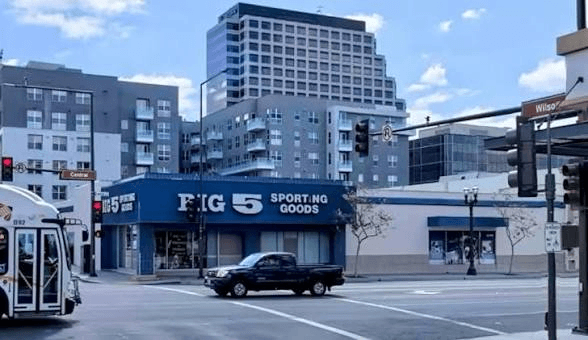
If you’ve driven past a Big 5 store lately and spotted a “going out of business” banner, it’s easy to assume the whole chain is done. That assumption is understandable — but it’s not accurate. The real situation is more complicated than either “they’re closing everything” or “everything is fine.”
This article covers what’s actually happening: whether Big 5 is shutting down entirely, who bought the company, why individual stores are closing, what happened to the stock, and what customers can expect going forward.
Big 5 Is Not Shutting Down Entirely
Let’s start with the direct answer. Big 5 Sporting Goods has not filed for Chapter 11 bankruptcy. There has been no company-wide liquidation announced. The chain is still operating stores across the United States.
As of mid-2025, Big 5 still had around 414 stores open. That number is down from roughly 430 stores in late 2023, which means the company has been shrinking — but shrinking is very different from disappearing.
The key distinction here is between a brand reducing its footprint and a brand going away entirely. A retailer can close underperforming locations and keep running the rest of the business. That’s what Big 5 appears to be doing right now.
Who Bought Big 5 Sporting Goods
In 2025, Big 5 was acquired by a partnership of Worldwide Golf and Capitol Hill Group. The deal was an all-cash transaction valued at approximately $112.7 million.
This was a straight acquisition — not a merger of equals. Worldwide Golf and Capitol Hill Group bought the company outright. Once the deal closed, Big 5 became a private, wholly owned subsidiary under the new ownership structure.
What does that mean practically? It means Big 5 now answers to private owners rather than public shareholders. The company no longer has to file public earnings reports or hold investor calls. That reduces the amount of information available about the company’s future plans, which can make it harder for outsiders to track what’s happening.
Going private doesn’t mean going away. It means the company operates under a different ownership model — one with fewer public disclosures. The stores can still open, the brand can still sell gear, and employees can still work there.
What Happened to Big 5’s Stock
Before the acquisition, Big 5 traded on the NASDAQ exchange under the ticker symbol BGFV. Once the acquisition closed, the stock was delisted. You can no longer buy or sell BGFV shares on a public market.
If you owned shares before the deal closed, this was an all-cash transaction. That means shareholders received a cash payout per share rather than shares in the new private entity. If you’re unsure about the status of a position you held, your brokerage account is the right place to check.
It’s worth repeating: a company going private is not the same as a company going out of business. Plenty of companies operate profitably as private entities. The difference is that the public simply has less visibility into their finances and strategy going forward.
Why Specific Big 5 Stores Are Closing
This is where most of the confusion comes from. People see a “going out of business” sign at a specific Big 5 location, and they assume the whole chain is collapsing. That’s not how it works.
Store closures have been reported in Colorado, Idaho, California, Arizona, and other states. Each of these closures involves a single location shutting down — not a regional or national shutdown. The store runs a closeout sale with deep discounts, marks a final closing date, and then shuts its doors. Meanwhile, other Big 5 locations in nearby cities stay open and operating normally.
Think of it this way: if your local pizza chain closes one underperforming location, that doesn’t mean every other location is closing. It means that specific spot wasn’t working financially, and the business made the call to exit it.
In fiscal 2024, Big 5 closed more stores than it opened. That trend reflects a deliberate strategy to cut locations that aren’t pulling their weight, not a sign that the company is in full collapse mode. The closeout sales at individual stores look dramatic — 30%, 50%, 70% off banners in the windows — but that’s standard practice for any single-location exit. It’s a clearance sale, not a funeral.
The Business Pressures Behind the Store Reductions
There are real reasons why Big 5 has been pulling back. This isn’t just a routine trimming of the store count — the company has faced genuine financial pressure over the past few years.
Inflation raised operating costs across the board. At the same time, consumers pulled back on discretionary spending — things like sporting equipment, outdoor gear, and athletic clothing are often the first purchases people skip when budgets get tight. Big 5’s core customer base felt that squeeze, and sales reflected it.
Profits fell sharply in the period leading up to the acquisition. Inventory levels dropped as the company adopted a more cautious purchasing strategy. That’s a sign of a business trying to control costs and avoid being stuck with unsold product — not necessarily a sign of imminent collapse, but definitely a sign of strain.
It’s also worth noting that these pressures are not unique to Big 5. Other mid-tier sporting goods and specialty retailers have faced similar challenges. The post-pandemic retail environment has been tough for chains that rely on high foot traffic and discretionary purchases. Big 5 isn’t the only one navigating this — it’s just one of the more visible examples right now.
For more retail and business coverage like this, SlideJournal covers industry developments in plain language worth bookmarking.
What This Means for Customers
If you shop at Big 5, here’s what actually matters for you:
- Your local store may or may not be closing. Check whether your specific location has announced a closure. A “going out of business” sale at one store doesn’t tell you anything about stores in other cities.
- Gift cards and store credit carry some risk during a transition period. When any retailer changes ownership or reduces its footprint, it’s smart to use existing gift cards sooner rather than later.
- Online availability may shift. Private ownership can bring operational changes, so it’s worth checking the Big 5 website directly for current availability if you shop online.
- Closeout sales at closing locations are legitimate deals. If a store near you is shutting down, those discounts are real. It can be a good time to pick up gear at a reduced price.
The Bottom Line
Big 5 Sporting Goods is not going out of business in the way most people mean when they ask that question. The company has not filed for bankruptcy. There is no chain-wide liquidation happening. The brand still exists and still operates hundreds of stores.
What is true: Big 5 is smaller than it used to be, it’s now privately owned after a $112.7 million acquisition by Worldwide Golf and Capitol Hill Group, and it has been closing individual underperforming stores at a steady pace. The stock is gone from public markets, and the company is less transparent than it was as a publicly traded entity.
That’s a business under pressure making hard choices to stay viable — not a business dying. Whether the new ownership can stabilize and grow the brand is a different question, and one that only time will answer. For now, Big 5 is still here. Just in a different shape than it was a few years ago.
Also Read This: