

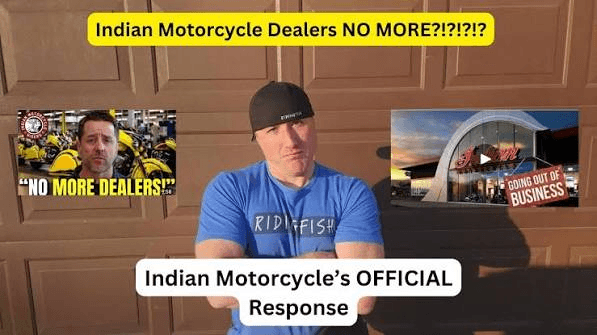
If you saw recent headlines about Polaris selling Indian Motorcycle and assumed the worst, you are not alone. A lot of riders and fans jumped to the same conclusion. But the brand is not shutting down. What happened was a sale and ownership change — and those are two very different things.
This article breaks down exactly what was announced, who owns Indian Motorcycle now, what is happening with factories and jobs, and what might realistically change going forward.
The Short Answer: Indian Motorcycle Is Not Shutting Down
There has been no bankruptcy filing. No liquidation announcement. No factory closure order. The news that sparked the rumors was a business transaction — a sale — not a shutdown.
When people hear phrases like “divestiture” or “change of ownership,” it can sound like something is ending. But a company being sold and a company closing are two completely different events. Right now, all available information points to a transaction, not a collapse.
What Polaris Actually Announced
In October 2025, Polaris announced it would spin off and sell a majority stake in Indian Motorcycle to an investment group called Carolwood LP. The deal officially closed on February 2, 2026.
A spin-off means Polaris separated Indian Motorcycle from its larger corporate structure so the brand could operate on its own. It does not mean the brand was eliminated or wound down.
Polaris also kept a minor equity stake in the deal, meaning it still holds a small financial interest in Indian Motorcycle. That is not what a company does when it wants to walk away completely.
A simple way to think about it: imagine a parent company handing a business unit its own set of keys. The business still runs — it just has different management making the decisions now.
Who Owns Indian Motorcycle Now
As of early 2026, Carolwood LP is the majority owner of Indian Motorcycle. The brand is now a standalone company, which means it no longer reports to Polaris or operates inside Polaris’s corporate structure.
“Standalone company” simply means Indian Motorcycle makes its own decisions. It is not a warning sign by itself.
Private equity or investment group ownership does not automatically mean a brand is being prepared for liquidation. In many cases, it means a portfolio restructure or an attempt to grow the brand independently. Indian Motorcycle’s own official Facebook announcement used the “standalone company” language directly, framing it as a transition, not a closure.
What Carolwood’s specific long-term strategy looks like has not been detailed publicly. That part is genuinely unknown, and it would be dishonest to speculate beyond what has been officially stated.
Factories and Employees After the Sale
This is where a lot of the concern focused, and understandably so. Factory closure rumors are common during ownership changes because people associate corporate transitions with job cuts.
But the reported facts here do not match that fear. Production locations are reported to remain in Spirit Lake, Iowa and Monticello, Minnesota. At the time of the sale announcement, Indian Motorcycle employed approximately 900 people across manufacturing sites and a design and technology center in Switzerland.
Active factories and a retained workforce are real, concrete signals that operations continued through the transition. A company preparing for liquidation does not typically maintain multiple active production sites across two states.
That said, ownership changes can bring operational adjustments over time. It would be unrealistic to say nothing will ever shift. But based on what the sources confirm, there is no evidence of plant closures or mass layoffs tied to this sale.
Why This Sale Triggered Shutdown Rumors
Understanding why people got alarmed is worth a minute. It was not an unreasonable reaction, even if the conclusion was wrong.
Corporate announcements use language that sounds worse than it is. Words like “divestiture,” “spin-off,” and “standalone entity” are standard business terms, but they can read like warning signs to people outside that world. When a company says it is separating a brand, it sounds like abandonment even when it is really just a restructure.
Indian Motorcycle also carries a lot of weight in American motorcycle culture. It is historically recognized as America’s first motorcycle company, which means any news about the brand travels fast and gets a strong reaction. Fans are protective of it, and they should be.
On top of that, social media and commentary videos amplified the speculation quickly. Some content creators framed the sale as a crisis without distinguishing between “being sold” and “shutting down.” That gap in clarity is where the rumors took hold.
The difference between a company changing hands and a company going under is not always obvious in a short headline. That is a real communication problem, and it is what drove most of the confusion here.
What Could Actually Change Under New Ownership
Even though the brand continues operating, it is fair to ask what new ownership might mean in practical terms. Here are a few areas that could shift, based on what typically happens after this kind of transaction.
Product Strategy
Carolwood may choose to adjust which models Indian focuses on, how quickly new bikes are developed, or what segments the brand targets. That kind of strategic shift is normal after a change in ownership. Nothing has been officially announced yet on this front.
Dealer and Service Networks
Dealer relationships are often reviewed after a brand becomes independent. Dealers may see changes in how support, parts pricing, or incentive programs are structured. Again, nothing specific has been confirmed — this is an area to watch.
Investment Pace
Under Polaris, Indian was one division competing with others for internal resources. As a standalone company, its leadership can make a direct case for investment without having to share budget with Polaris’s other product lines, like off-road vehicles or snowmobiles. That could be a real advantage, or it could create pressure to generate faster returns. It depends on how Carolwood approaches the business.
Brand Identity
Indian Motorcycle has strong brand recognition. That does not disappear with a sale. The name, the history, and the existing lineup are assets that Carolwood now owns. There is no financial logic in dismantling something people are willing to pay for.
For more straightforward coverage of business and industry topics like this one, SlideJournal is worth bookmarking.
What Riders and Buyers Should Actually Do Right Now
If you own an Indian Motorcycle, there is no reason to panic about parts or service availability based on what has been reported. Factories are reportedly still running and the company is still operating.
If you are thinking about buying a new Indian, the honest advice is to watch what happens over the next six to twelve months. New ownership means some uncertainty about future models and long-term support. That is always worth factoring into a major purchase decision, but it is not a reason to treat the brand as finished.
If you are a dealer or employee, the clearest thing to do is wait for direct communication from Indian Motorcycle’s new leadership rather than relying on secondhand reporting or online commentary.
The Bottom Line
Indian Motorcycle is not going out of business. Polaris sold a majority stake in the brand to Carolwood LP, and the deal closed in February 2026. Indian now operates as a standalone company with factories reportedly still running in Iowa and Minnesota and roughly 900 employees.
The sale triggered shutdown rumors because corporate language sounds alarming and because people care deeply about this brand. But a business being sold is not the same as a business being closed. Right now, the facts support continuation, not collapse.
What the future looks like under Carolwood is still being written. The smart move is to follow official announcements from Indian Motorcycle directly rather than filling the gaps with speculation.
Also Read This: