

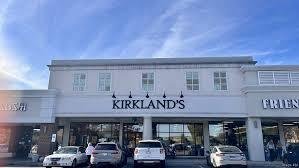
If you’ve walked past a Kirkland’s Home store and spotted a “store closing” sign, it’s easy to jump to conclusions. The whole chain must be shutting down, right? That’s the wrong read—but the full picture is more complicated than a simple yes or no.
Here’s what’s actually going on: Kirkland’s is closing some stores, converting others to a different brand, and changing its corporate name. This article breaks down exactly what that means, why it’s happening, and what you should know if you’re a shopper.
Kirkland’s Is Not Fully Going Out of Business
Let’s clear this up first. Kirkland’s Home is not closing every single location. The company operates roughly 313 stores, and around 25 have been identified for permanent closure based on recent reporting from TheStreet and MSN Money.
That’s a meaningful number, but it’s a fraction of the total footprint. The company has not filed for bankruptcy. What’s happening is a business restructuring—closing underperforming locations to make the overall operation more financially stable.
Think of it like a restaurant chain that shuts its five weakest locations while keeping 40 others open. The brand isn’t gone; it’s trimming what isn’t working. That’s the situation with Kirkland’s right now.
Closing some stores while the rest stay open is a standard move in retail. It doesn’t mean the whole company is collapsing—it means they’re trying to stop the bleeding in the spots where it hurts most.
The Rebrand to The Brand House Collective
Here’s the part of this story that most people haven’t heard yet. Kirkland’s Home is changing its corporate name to The Brand House Collective. This was reported in 2026 and represents the most significant shift in how the company plans to operate going forward.
This isn’t just a logo change. It signals a real shift in the company’s direction. Some existing Kirkland’s locations aren’t being closed outright—they’re being converted into Bed Bath & Beyond Home stores. The plan, according to TheStreet and MSN reporting, involves converting many stores to the Bed Bath & Beyond Home banner over roughly two years.
So when you see a Kirkland’s in your area posting a closing sale, it doesn’t automatically mean that storefront is gone forever. It might reopen under a different name at the same address.
This is an important distinction. There’s a real difference between a store that is permanently shutting down and a store that is closing as one brand in order to reopen as another. Both look the same from the outside—signs in the window, discounted merchandise, empty shelves—but the outcomes are different.
Part of what funded this transition: Kirkland’s sold the rights to its brand name for $10 million as part of the Brand House Collective deal, according to MSN Money. That capital is helping cover the cost of the restructuring and conversion process.
Kirkland’s Home Is Not Costco’s Kirkland Signature
This one causes a surprising amount of confusion, so it’s worth stating clearly. Kirkland’s Home and Costco’s Kirkland Signature are two completely different companies. They share a name and nothing else.
Kirkland’s Home is a standalone home décor retail chain. Costco’s Kirkland Signature is Costco’s private label brand—it shows up on everything from paper towels to olive oil. The two have no operational connection, no shared ownership, and no business relationship.
When news about Kirkland’s store closures spread on social media, some people have read it as Costco news. It isn’t. If you’re a Costco shopper, none of these store closures affect you or the Kirkland Signature products you buy there.
Mile High on the Cheap explicitly flagged this confusion in its coverage of the closures, and it’s worth repeating here because the misunderstanding is genuinely common.
Why Kirkland’s Is Closing Some Stores
The short answer is financial pressure. Kirkland’s has faced tightening cash availability and borrowing constraints, according to Yahoo Finance coverage. The company needed to make hard choices about which stores were worth keeping.
CEO Amy Sullivan has described the approach as closing or converting underperforming locations to improve overall profitability. The closures aren’t random—they’re tied to specific stores that aren’t generating enough revenue to justify keeping them open, and in many cases, the timing lines up with local lease expirations.
This is a cost-reduction and brand-consolidation strategy, not a sign that the company is about to disappear. The goal is to come out smaller but more stable, with a clearer identity under the Brand House Collective model.
Selling the Kirkland’s brand name for $10 million also gave the company some runway. That money helps fund the conversions to Bed Bath & Beyond Home and keeps operations going during the transition period.
The closures are being handled store by store, not as one mass shutdown event. Some stores closed in late 2025. Others may close or convert in 2026 and into 2027. The timeline varies by location.
How to Find Out If Your Local Store Is Closing
There’s no single, up-to-date list that covers every affected store. Coverage from USA Today and MSN has named specific states and cities, but those lists reflect reporting at a particular moment—the situation can change.
Here are the most practical steps to check on your specific location:
- Visit the store directly. If there are closing signs or liquidation sales posted, that’s the clearest signal.
- Check the Kirkland’s website. Use the store locator to see if your location still appears and has listed hours.
- Call the store. A quick phone call takes 30 seconds and gives you a direct answer.
- Search local news. Many closures have been covered by local news outlets before the national press picks them up.
Don’t rely on social media posts alone. Rumors spread fast, and a closure reported in one city gets shared as if it applies nationwide. Always verify with a local source.
What Shoppers Should Know About Closing Sales
If a Kirkland’s near you is genuinely closing, the liquidation sales can be worth checking out. Stores in the process of shutting down often offer significant discounts to clear inventory quickly.
A few things to keep in mind:
- Closing sales are usually final sale. Returns are typically not accepted once a liquidation is underway.
- Discounts vary. Early in a closing sale, discounts might be modest—10% to 20%. As the close-out date approaches, they often get steeper.
- Inventory is limited. You’re shopping what’s left, not a full selection.
- Gift cards may have an expiration risk. If you have a Kirkland’s gift card and your location is closing, check with the company about whether cards remain valid at other locations or online.
The closing sale at any individual store only applies to that store. An “everything must go” sign at a Kirkland’s in Rochester, Minnesota—as covered by The Sun—doesn’t mean the store in your state is in the same situation.
Will Kirkland’s Still Exist?
In some form, yes. The company is restructuring and rebranding, not disappearing. Under The Brand House Collective name, the plan is to continue operating a physical store presence—partly as Bed Bath & Beyond Home locations converted from existing Kirkland’s stores.
Whether the online presence continues, and in what form, is worth watching. The company has faced real financial strain, and the next year or two will determine how successful the transition turns out to be.
For ongoing retail news and business coverage, Slidejournal covers industry shifts worth keeping an eye on.
The bottom line: Kirkland’s is going through a difficult but deliberate restructuring. Some stores are closing permanently. Others are converting to a new banner. The company is not going out of business entirely, but it will look different over the next couple of years.
If you want to know whether your specific store is affected, the best move is to check directly—don’t assume the worst based on a social media post, and don’t assume everything is fine either. The truth is somewhere in between, and it depends on where you live.
Also Read This: