

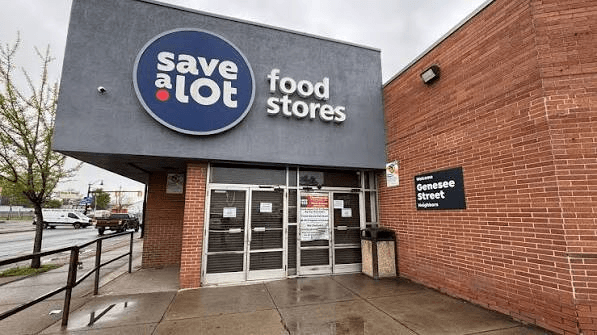
Headlines saying Save A Lot shut 100 stores in 16 months and exited three states sound like a chain in freefall. But the full picture is more complicated than that. Save A Lot is not going out of business—it is shrinking, restructuring, and pulling back from certain markets while still running hundreds of stores across the country.
This article explains what is actually happening: what Save A Lot looks like today, why stores keep closing, how the company changed its business model, and how to figure out if your local store is at risk.
Save A Lot Is Not Going Out of Business—But It Is Shrinking
Save A Lot still operates roughly 720 stores across 32 states with over $2.6 billion in annual sales. That is not a company on the edge of disappearing. It is, however, a company that has contracted noticeably in recent years.
There is an important difference between “shrinking” and “shutting down.” When you read that Save A Lot closed 100 stores, that does not mean the company filed for bankruptcy or announced a full liquidation. It means individual locations closed—for various reasons, in various places—while the brand kept operating everywhere else.
Think of it like a fast-food franchise. When a local McDonald’s closes, that does not mean McDonald’s as a company is collapsing. The same logic applies here. Save A Lot’s stores are run by independent operators, and when one of them shuts down, that is a local event—not a corporate death notice.
Save A Lot No Longer Owns Its Stores
This is the part most people do not know, and it explains almost everything else.
Save A Lot used to own and operate its own stores directly. That has changed. The company sold its last 18 company-owned stores—all located in the St. Louis market—to a company called Leevers Supermarkets. That sale completed a full shift in how Save A Lot operates.
Today, Save A Lot works purely as a wholesaler and licensor. It supplies products and licenses its brand to independent business owners who run the actual stores. Save A Lot the company does not walk into a location every morning and open the doors. A local operator does.
This matters because when a store closes, it usually means the local operator ran into problems—financial trouble, a bad lease, competition from nearby stores—not that Save A Lot headquarters made a decision to close that location. The brand and the supply chain can stay intact even as individual stores come and go.
Why So Many Individual Stores Have Closed Recently
Running a discount grocery store is hard. Margins are thin, and competition is intense. Walmart, Aldi, and dollar stores have all pushed hard into the same low-price grocery space where Save A Lot operates. When costs rise and customer traffic drops, independent operators feel that pressure first.
Here are some real examples of recent closures:
- A Kansas City, Missouri location closed after 19 years. Staff posted a handwritten sign announcing the permanent closure.
- A Springfield, Illinois store shut its doors on Christmas Eve after 26 years of operation.
- A Hopewell, Virginia store closed after 27 years. The operator cited “changing market dynamics.”
- A store in Syracuse, New York closed, leaving North Side residents without a nearby affordable grocery option. Neighbors said they “relied on it.”
These closures share a pattern: long-running stores in lower-income communities, closing quietly with little warning. Most of them only appear in local news, which is why customers experience them as sudden and unexplained.
The Chicago Yellow Banana Case
One of the clearest examples of how the licensing model creates local risk is what happened in Chicago. A company called Yellow Banana operated seven Save A Lot stores on the South and West sides of the city. Save A Lot ended its licensing agreement with Yellow Banana, citing financial headwinds on the operator’s end.
That put all seven stores at risk of closing abruptly—not because Save A Lot as a company was failing, but because the local operator could not find investors to keep the business running. From a customer’s point of view, their Save A Lot was closing. From a corporate structure point of view, one licensee was struggling while hundreds of other stores continued operating normally.
This is exactly the kind of situation that generates alarming headlines without telling the full story.
The Stores That Have Closed and Where Save A Lot Has Pulled Back
Save A Lot has exited three states entirely and pulled back sharply in several others. These are regional retreats, not signs of a national shutdown.
In Maine, closures in Lewiston and Waterville left only three stores in the entire state. That is close to a full exit from that market. In Florida, at least five locations in Southwest Florida closed in early 2026. A large store in Newark, New Jersey also shut down, drawing significant local attention.
Each of these represents a real loss for the communities involved. Discount grocery stores often serve neighborhoods where people cannot easily drive to a Whole Foods or a large suburban supermarket. When a Save A Lot closes in those areas, the nearest affordable option can suddenly be miles away.
But again, these are concentrated in specific regions. The chain still has stores running in 32 states, and many of them are not facing any reported threat of closure.
There Are Also Signs of Active Investment in Some Markets
The closure narrative is real, but it is not the only thing happening. Save A Lot has also been reopening and repositioning stores in certain markets.
The company reopened 27 stores in Indiana, Ohio, and Pennsylvania after acknowledging that an earlier rebranding effort had been “improperly handled.” That is not the move of a company winding down—it is a company correcting course and recommitting to specific locations.
In addition, Save A Lot’s official newsroom announced that eight stores in Oklahoma, Tennessee, and Arkansas were placed under new management. That kind of active licensee management suggests the company is still working to keep stores open where it can, not simply letting the network collapse.
None of this means Save A Lot is in great shape. But it does mean the picture is more mixed than “giant grocery chain shutting down.”
How to Tell If Your Local Save A Lot Is at Risk
Because each store is independently operated, the fate of your local Save A Lot depends on factors specific to that location—the operator’s finances, the lease terms, local competition, and foot traffic. There is no central list of planned closures that Save A Lot publishes in advance.
Here are practical ways to stay informed:
- Check local news. Most closures show up in local newspapers or TV station websites before they happen, or just after a sign goes up in the window.
- Watch the store itself. Thinning inventory, reduced hours, or staff changes can be early signals.
- Check Save A Lot’s website. The store locator will eventually stop showing a location that has closed.
- Follow city council or community news. In cities like Chicago, closures became public through city notices and community meetings before local media picked them up.
There is no perfect early warning system, but staying connected to local news is your best option.
The Broader Pressure on Discount Grocers
Save A Lot’s struggles do not exist in a vacuum. The entire discount grocery space is under pressure right now. Rising food costs, higher labor expenses, and aggressive competition from Walmart, Aldi, and Dollar General have squeezed every thin-margin grocer in the country.
Save A Lot’s shift to a wholesaler and licensor model can be read as a strategic attempt to survive in that environment—offloading the cost and risk of running stores directly while keeping the brand and supply chain alive. Whether that strategy works long-term is still playing out.
For more coverage of business trends like this, SlideJournal tracks ongoing changes in retail, company strategy, and consumer markets.
The Bottom Line
Save A Lot is not going out of business. It is a functioning national brand with roughly 720 stores, over $2.6 billion in annual sales, and an active supply and licensing operation. But it is also contracting—closing stores in vulnerable markets, exiting some states entirely, and navigating a difficult environment for discount grocery retail.
The closures are real and they hurt real communities. People who depended on their local Save A Lot for affordable food are facing longer trips and higher prices. That impact deserves to be taken seriously.
But “shrinking and restructuring” is not the same as “going out of business.” If you want to know whether your specific store is at risk, watch local news and pay attention to what is happening inside the store. The answer will be found at the local level—not in a corporate announcement.
Also Read This: